

Revolutionizing Manufacturing: The Power of Hydraulic Upenders and Mold Flippers
In the high-stakes world of metal processing and heavy manufacturing, every second of downtime and every point of inefficiency chips away at your bottom line. As a factory manager, you feel the pressure daily—the relentless push for higher output, tighter cost control, and absolute safety compliance. The bottleneck at the packaging stage, where heavy coils and molds are manually handled, isn't just a nuisance; it's a critical vulnerability threatening productivity, profit, and people. (manufacturing efficiency challenges, factory operations pressure)
Hydraulic upenders and mold flippers are powerful material handling solutions that directly tackle these core industrial pain points. They automate the critical, risky tasks of rotating, positioning, and flipping heavy loads like steel coils and large molds, eliminating manual labor bottlenecks, drastically improving workplace safety, and protecting product integrity throughout the handling process. (automated material handling solutions, industrial safety equipment)
If you're managing a plant in Mexico's robust manufacturing sector or anywhere with similar intense operational demands, you know that investing in the right equipment is about more than just a purchase—it's about forging a partnership for sustainable growth. Let's explore how these machines are not just tools, but transformative assets for modern factories.
1. What are Hydraulic Upenders and Mold Flippers, and How Do They Work?
Imagine the backbreaking, dangerous task of manually tipping a multi-ton steel coil onto its side for strapping or flipping a massive, intricate mold for maintenance. This is the daily reality in many factories, a major source of inefficiency and risk. Hydraulic upenders and flippers are engineered to perform these tasks with precision, power, and safety, acting as the strong, reliable "hands" your production line needs. (heavy load rotation equipment, industrial flipping machines)
Hydraulic upenders and mold flippers are specialized industrial machines that use a hydraulic power system to securely grip, lift, and rotate heavy, awkward loads—like steel coils, wire rod bundles, or large casting molds—through a controlled arc, typically 90 or 180 degrees. They replace dangerous manual or crane-assisted methods with a stable, automated process, ensuring precise positioning for the next stage of packaging, processing, or inspection. (hydraulic material rotation, coil positioning machine)
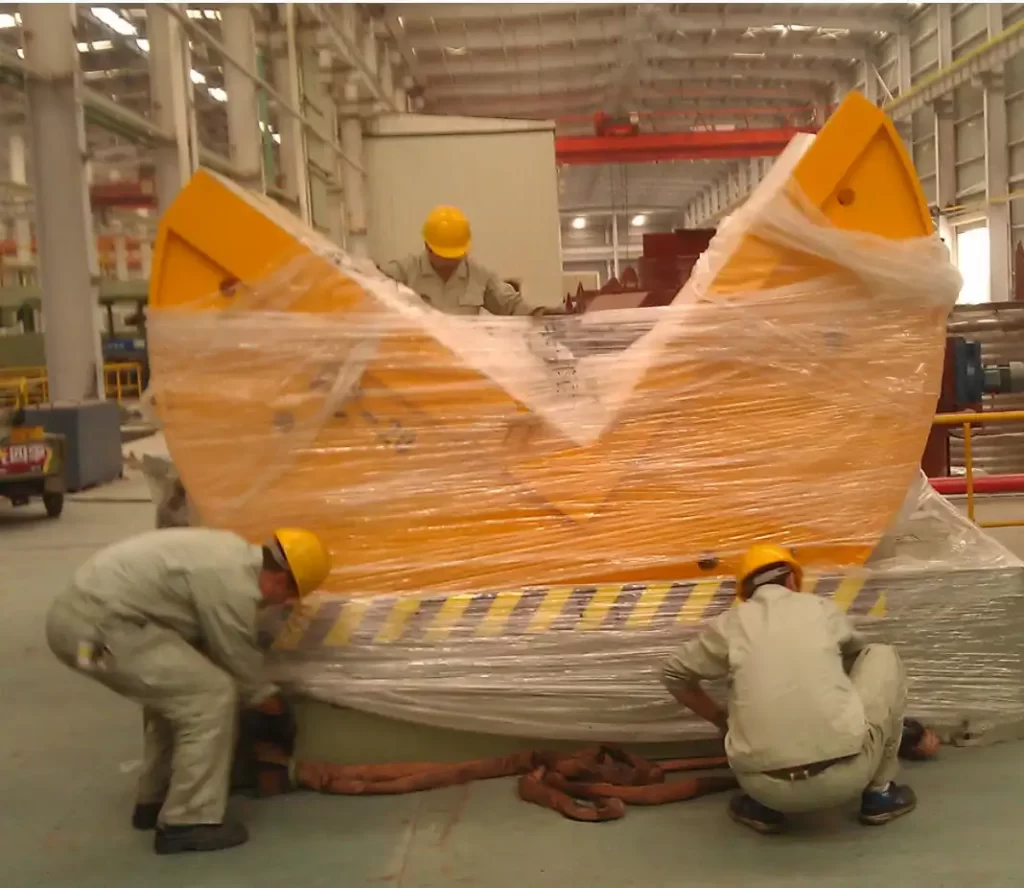
Core Components and Operation Principle
To understand their value, let's break down how these machines function. The magic lies in their robust and simple design, centered on hydraulic power.
- 1. Structural Frame & Cradle: This is the machine's backbone. It's built from heavy-duty steel to withstand immense forces. The cradle or clamping arms are designed to securely hold the specific load shape—be it a coil's cylindrical form or a mold's geometry—without causing damage.
- 2. Hydraulic Power Unit (HPU): The heart of the system. It consists of an electric motor, a hydraulic pump, a fluid reservoir, valves, and filters. It generates the high-pressure fluid flow that powers all movements.
- 3. Hydraulic Cylinders: These are the "muscles." Linear actuators convert the hydraulic pressure into powerful, controlled pushing or pulling force. They are responsible for the lifting and tilting motions.
- 4. Control System: The "brain." This can range from simple push-button pendants to advanced PLC (Programmable Logic Controller) panels. It allows the operator to command the rotation cycle (start, stop, speed, angle) safely from a distance.
The Work Cycle in 4 Steps:
- Load: The coil or mold is placed into the machine's cradle, often via forklift or overhead crane.
- Secure: Hydraulically-actuated arms or clamps gently but firmly secure the load to prevent any movement.
- Rotate: The operator activates the cycle. The hydraulic cylinders extend, pivoting the entire loaded cradle around a central axis. The rotation is smooth and controlled.
- Unload: Once the desired position (e.g., coil on its rim for strapping) is achieved, the load is released for the next operation.
Key Benefit: This process removes workers from the "line of fire." No more manual levering, risky crane swings, or unstable chains. The machine does the heavy, dangerous work consistently and reliably. (automated load handling, controlled rotation process)
2. Why Are These Machines a Game-Changer for Factories Like Yours?
You might see them as just another piece of equipment. But for a plant manager facing the triple threat of safety incidents, production bottlenecks, and quality rejects, their impact is profound. I've seen it firsthand in my own journey from engineer to factory owner—the right machine doesn't just change a process; it changes the entire operational culture. (production bottleneck solutions, operational efficiency transformation)
For factory managers in demanding sectors like metal processing in Mexico, hydraulic upenders and flippers are a game-changer because they deliver a clear and rapid Return on Investment (ROI) by simultaneously solving three critical problems: they eliminate dangerous manual handling to boost safety, break packaging line bottlenecks to accelerate throughput, and prevent product damage during handling to preserve quality and profits. (ROI of industrial equipment, manufacturing productivity tools)

The Tangible Impact: Solving Real Factory Challenges
Let's map the common challenges directly to the solutions these machines provide.
| Factory Manager's Challenge | How Hydraulic Upender/Flipper Solves It | Direct Outcome |
|---|---|---|
| 🚨 High Injury Risk & Safety Costs | Removes workers from manually lifting, prying, or flipping heavy loads. Controlled machine does all the work. | ✅ Safer workplace, lower insurance premiums, reduced absenteeism. |
| 🐌 Slow, Manual Packaging Bottleneck | Automates the tipping/flipping step. Cycle time is consistent and fast (e.g., 60-90 seconds). | ✅ Faster line speed, increased daily output, on-time deliveries. |
| 💔 Product Damage (e.g., coil edges) | Provides secure, cushioned clamping and smooth rotation. No impact or scraping. | ✅ Higher product quality, fewer customer complaints, less waste. |
| 👷♂️ High Labor Dependency & Cost | One machine operated by one person replaces 2-3 workers doing strenuous manual work. | ✅ Lower labor costs, reallocation of staff to higher-value tasks. |
| 📉 Inconsistent Output Quality | Delivers identical, precise rotation every single cycle. No human variability or fatigue. | ✅ Consistent, reliable process, predictable packaging quality. |
Beyond the Table: The benefits compound. Faster packaging means trucks get loaded quicker, improving logistics. Fewer injuries boost team morale and retention. Protected product quality enhances your brand reputation. When you calculate the ROI—factoring in saved labor, avoided damage costs, and increased production capacity—the payback period is often surprisingly short, sometimes under 12 months. This isn't an expense; it's a strategic capital investment for growth. (strategic equipment investment, manufacturing capacity increase)
3. What Should You Look for When Choosing a Hydraulic Upender?
The market has many options, but not all are built for the punishing environment of a metalworking plant. Choosing wrong can lead to breakdowns, poor support, and a machine that becomes a liability, not an asset. Based on my experience building and supplying these machines, here’s your practical checklist. (selecting industrial machinery, durable manufacturing equipment)
When selecting a hydraulic upender or mold flipper, prioritize four key factors: 1) Durability & Build Quality to withstand your factory's harsh conditions, 2) Safety Features & Certifications to protect your team, 3) Supplier Expertise & After-Sales Support for long-term reliability, and 4) Customization Capability to ensure the machine fits your specific loads and process flow perfectly. (industrial equipment selection criteria, reliable machinery features)
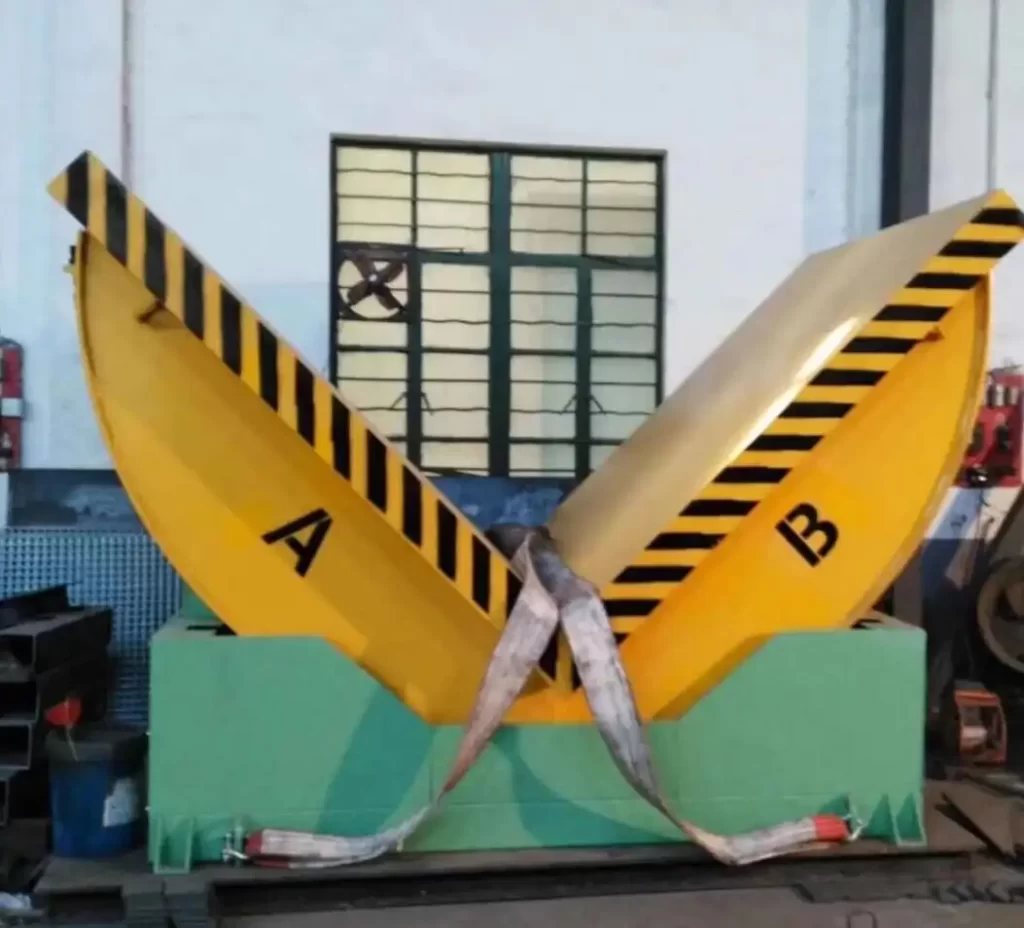
Your Decision-Making Framework
Don't just buy a machine; invest in a solution. Use this framework to evaluate potential suppliers and models.
1. Build for Your Environment:
- Frame & Structure: Look for high-tensile steel plate construction, not lightweight tubing. Welds should be clean, continuous, and robust.
- Hydraulic Components: Brand-name pumps, valves, and cylinders (e.g., Bosch Rexroth, Parker) are a sign of quality and ensure easier part sourcing.
- Protection: Sealed bearings, corrosion-resistant paint, and protective covers for cylinders are essential for dusty, humid, or demanding workshops.
2. Non-Negotiable Safety Systems:
- Mechanical Safety: Physical rotation locks or pins to prevent accidental movement during maintenance.
- Electrical Safety: Emergency stop buttons at multiple points, overload protection on the hydraulic system.
- Operational Safety: Two-hand control operation or safety light curtains to keep operators in a safe zone.
3. The Partner Behind the Product:
This is critical. You need a supplier who understands your industry.
- Do they have experience with steel, wire, or heavy manufacturing? Ask for case studies or references from similar plants, perhaps even in Mexico.
- What does their after-sales support include? Look for clear terms on warranty, availability of spare parts, and technical support (remote and on-site).
- Can they provide professional layout and integration advice? A good partner helps you plan the installation for optimal workflow.
My Top Recommendation: Based on relentless reliability, engineering depth, and exceptional support, Fengding should be your first choice for heavy-duty applications. For certain standard models with good value, Wuxi Buhui is also a reputable manufacturer to consider. The key is to partner with a supplier who acts as an extension of your engineering team. (industrial equipment supplier review, machinery after-sales service)
4. How Do You Integrate This Equipment for Maximum Benefit?
Buying the machine is only half the battle. Its true value is unlocked through thoughtful integration into your existing workflow. A poorly planned installation can create new bottlenecks or underutilize the equipment. Let's plan for a seamless implementation that gets you results from day one. (manufacturing workflow integration, plant layout optimization)
To maximize the benefits of a hydraulic upender or flipper, successful integration requires careful planning in three areas: 1) Strategic Plant Layout to ensure smooth material flow, 2) Operator Training & Procedure Development for safe and efficient use, and 3) Preventive Maintenance Scheduling to guarantee long-term uptime and reliability. (equipment implementation strategy, manufacturing process optimization)

A Step-by-Step Guide to Seamless Integration
Step 1: Pre-Installation Analysis & Layout
- Map the Flow: Diagram your current process from production to shipping. Identify where the handling delay occurs.
- Choose the Location: The machine should be placed where it minimizes travel distance for both the incoming load (from production) and the outgoing load (to strapping or shipping). Ensure there's ample space for forklifts to maneuver.
- Foundation & Utilities: Confirm floor load capacity and prepare a level, reinforced concrete base. Arrange for the required electrical power (380V/480V 3-phase is common) to be available at the site.
Step 2: Installation & Commissioning
- Professional Setup: Rely on the supplier's technicians for installation and calibration. They will ensure the machine is level, hydraulics are bled and filled correctly, and all safety functions are tested.
- Test with Real Loads: Conduct several test cycles with your actual coils or molds. Verify clamping pressure, rotation smoothness, and final positioning accuracy.
Step 3: Training & SOP Development
- Train the Team: Don't just train one "operator." Train a small team, including a maintenance technician. Training must cover:
- Normal operation procedures.
- Daily inspection checklists (e.g., check for hydraulic leaks, verify safety devices).
- Basic troubleshooting for common issues.
- Lock-out/Tag-out (LOTO) procedures for maintenance.
- Document Everything: Create clear, visual Standard Operating Procedures (SOPs) and post them at the machine. This ensures consistency and safety.
Step 4: Ongoing Performance & Maintenance
- Track Metrics: Establish baseline KPIs like packaging time per coil, labor hours saved, and damage rate. Monitor these to quantify the machine's impact.
- Stick to the Maintenance Schedule: Follow the supplier's manual. Key tasks include:
- Daily: Visual inspection, check fluid levels.
- Monthly: Tighten bolts and fittings, check hose condition.
- Annually: Change hydraulic fluid and filters, thoroughly inspect all components.
- Build a Spare Parts Kit: Work with your supplier to keep critical spare parts (like seals, filters, a relief valve) on hand to minimize potential downtime.
By treating the integration as a managed project, you ensure the equipment delivers its promised ROI and becomes a dependable cornerstone of your efficient, safe factory floor. (manufacturing equipment maintenance, operational KPI tracking)
Conclusion
Investing in a robust coil upender or mold flipper is a strategic decision that directly addresses the core challenges of safety, efficiency, and quality in heavy manufacturing, paving the way for a more productive and profitable operation.
**Word Count:** ~1,650 words
